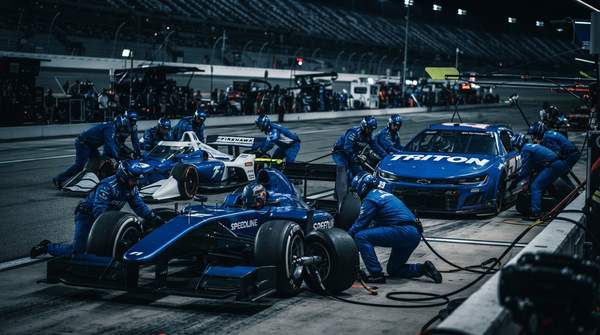
Race strategy in professional motorsport comes down to one core dilemma: push your tires now and pay for it with an extra pit stop, or conserve them and risk losing pace on track. But how that dilemma plays out depends almost entirely on which rulebook you race under. Formula 1 teams fight over fractions of a second in lightning-fast stops and no refueling; IndyCar teams juggle fuel mileage with a five-lug system and rules forcing tire conservation; NASCAR teams navigate pit-road officiating where a single speed-line violation can undo a perfect stop. Here are the four critical strategic elements—and how each series weights them differently.
The Strategic Chessboard: F1, IndyCar, and NASCAR
Why can't teams simply copy each other's playbooks? Because the three series have structurally different constraints. F1 strategy is engineered around tire degradation and stop timing, with strategists constantly monitoring wear, temperature, and car weight. IndyCar's own analysts describe its strategy as "like no other motorsport series on the planet," because the variety of tracks—short ovals, superspeedways, road courses, and street circuits—makes tire degradation nearly impossible to predict. NASCAR adds its own layer: stage racing and pit-road officiating that turns every stop into a rule-bound obstacle course. The same strategic input—a set of worn tires—produces three different decisions in three different paddocks.