Formula 1's design history is a conversation between physics and the rulebook. Every major leap in the sport's aerodynamics—wings in 1968, ground effect, the Drag Reduction System in 2011—produced faster cars, and every leap eventually drew a regulatory response aimed at keeping racing competitive and safe. The result is a cycle that continues into 2026, when DRS retires and active aerodynamics take over. Understanding that cycle is the key to understanding why F1 cars look the way they do.
The Dawn of Downforce: Early Wings and Aerofoils (1968)
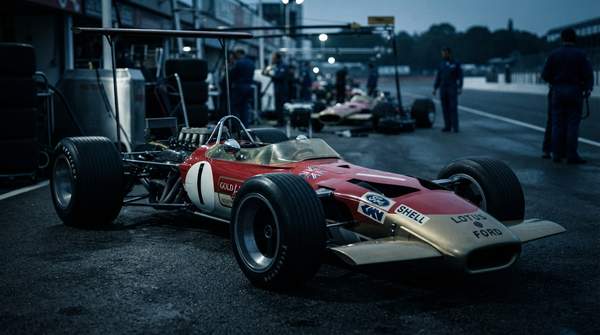
For the sport's first two decades, aerodynamics mostly meant minimizing drag so cars could slip through the air on the straights. That changed in 1968, which Troy Francks, writing for GRANDPRIX247, calls "the most significant evolution since its birth": the arrival of high-mounted wings that pressed the car into the track rather than merely letting it cut through the air.
The principle is simple. A wing angled through the airflow generates a force perpendicular to its motion—in this case downward. More downforce means more grip, which means faster cornering and better braking. As Mercedes' own technical feature puts it: "the more we can push the car down into the ground, the faster we go around the corners and the better the car handles."
But downforce has a price. Wings also produce drag, the force resisting motion through air, and the same feature that plants a car in corners can behave, in Mercedes' words, "like you've got a parachute on the back of your car" on the straights. That trade-off—grip versus top speed—has defined every aerodynamic era since, and F1's official explainer notes modern aerodynamics can generate downwards force equivalent to several times the car's own weight.
The Ground Effect Revolution: Harnessing the Underside
The next leap moved aerodynamics beneath the car. Ground effect exploits accelerated airflow under the floor, creating a low-pressure region that, as an Illumin Magazine analysis from USC Viterbi describes, "sucks" the vehicle downward. Instead of relying only on wings hanging in clean air, engineers shaped the car's underside itself—channeling air through the floor and out through a diffuser, which magnifies the effect and feeds downforce to the rest of the vehicle.
The performance consequences were dramatic. Ground effect undeniably improved lap times and vehicle stability, and teams began designing entire cars around the airflow under the floor, with front wings shaping the air for everything behind them. The USC analysis notes front wings alone contribute roughly 25–30% of total downforce and regulate the aerodynamics of the diffuser and rear wing in their wake.
It also introduced a lasting tension. Ground effect made cars faster, but its effect on overtaking remains contested, with studies showing mixed correlations between downforce regulations and passing frequency. That gap—between outright speed and close racing—became the sport's central problem, and it is the thread that runs through every regulation change since.