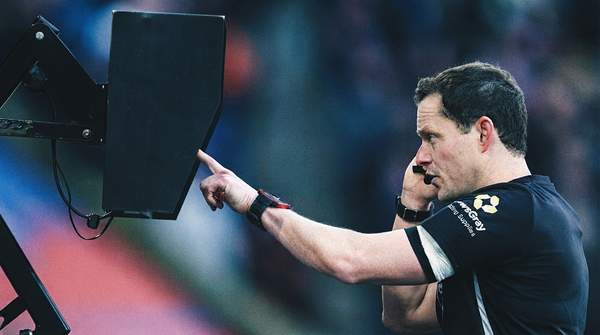
Video Assistant Referee technology can overturn a referee only in four match-changing situations—goals, penalty decisions, direct red cards, and mistaken identity—and only when the on-field call is a "clear and obvious error" or a factual mistake that the video evidence plainly corrects. The final decision always rests with the on-field referee, who is never overruled but only advised. Understanding that structure, and the different thresholds applied to subjective versus factual calls, explains most of what fans find confusing about VAR interventions.
Understanding VAR: Core Principles and Purpose
The VAR system exists, in FIFA's words, to "assist referees in making the best possible decisions on the field of play." It is not designed to re-referee every judgment call. A dedicated team of video match officials works from a video operation room, in direct audio contact with the referee throughout the match. The Premier League introduced the system for the 2019/20 season after its clubs voted unanimously in November 2018, and every one of its 380 fixtures per season is now monitored by a VAR working alongside an assistant.
The protocol's core principle is restraint. The International Football Association Board (IFAB), which writes the Laws of the Game, states that the referee's original decision "will not be changed unless there was a 'clear and obvious error'"—a formulation that includes decisions the referee made based on information from another match official, such as an offside flag. VAR corrects egregious mistakes; it does not relitigate marginal ones.
The Four Match-Changing Situations Reviewable by VAR
According to the Premier League's published rules, the VAR will intervene in four situations only: goals, penalties, red cards, and mistaken identity. Each category has a defined scope. Goal checks cover the attacking possession phase that led to the goal, looking for offside, fouls, or handballs by the attacking team. Penalty checks apply to fouls inside the penalty area, whether awarded or missed.
The red-card category is narrower than many fans assume. Only direct red-card incidents are reviewable, and the VAR may also intervene when a referee has clearly erred in showing only a yellow card for an offense that warranted a dismissal. Mistaken identity covers the rare case where the referee sanctions the wrong player for an offense. Off-the-ball incidents falling within these categories remain reviewable even when play is stopped, though the VAR has only a short window to act on unseen incidents; anything beyond that window goes to the FA's retrospective disciplinary process.