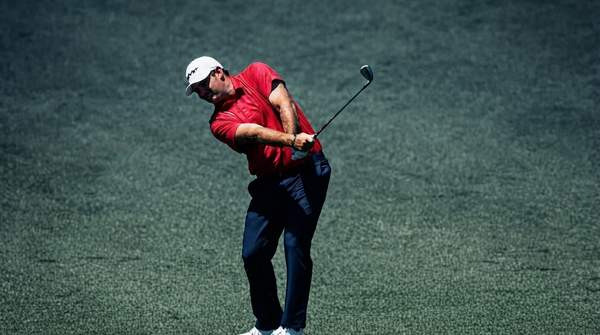
Here's the short answer: a 20-degree fairway wood, a 20-degree hybrid, and a 20-degree long iron are not the same club wearing different clothes. Loft is only one part of the equation, as the club fitters at Elite Performance Golf Studios put it — a 20-degree fairway wood can launch very differently from a 20-degree hybrid, and a utility iron with the same loft may produce a completely different flight again. So the choice isn't about which club is "best." It's about matching the club to the lie, the wind, and the shot you actually need. I'll give you the framework to do exactly that.
Design and Performance: Why Clubs with Similar Lofts Differ
All three clubs can fill the same slot in your bag. They can be used from the tee, the fairway, light rough, or long approach shots, and they can be built to similar lofts. Yet they rarely produce the same performance, and the reason is construction. Fairway woods have a broader sole and a larger head than hybrids, which is why they fly farther but typically lower relative to their size class. Hybrids sit in between: smaller than a wood, more forgiving than an iron, and easier to hit than either for many players. Long irons keep the traditional iron head and a shorter shaft than woods and hybrids, which is what gives skilled players their control.
The practical takeaway is simple. When you swap a hybrid for a fairway wood or a long iron of the same loft, you are not making a lateral move. You are trading launch, spin, and forgiveness against distance and workability. Ignore the number on the sole. Choose the flight.
Fairway Woods: Maximizing Distance and High Launch
If raw distance is the job, the fairway wood is the tool. Both PXG's equipment guidance and Bobby Walia's club-selection guide recommend fairway woods when maximized distance is the goal, and PXG notes the club type delivers a higher launch alongside that distance. The larger head and broader sole help get the ball airborne and make the club effective for long shots from the tee or from clean fairway lies.
Where the fairway wood earns its keep: long par 3s and par 5s where you need maximum carry, tee shots on tight holes where driver is too much club, and fairway lies where the ball sits up nicely. The trade-off is honesty. That bigger head is less forgiving on mishits than a hybrid, and from scruffy lies it can be a handful. If your typical course gives you clean fairway lies and you need yards, the fairway wood is your friend.