Every golf hole is a quiet argument between the architect and the player. The designer's real work is not scenery; it is strategy. The best courses present a set of choices on every shot, and the score you shoot depends on which choices you see and which you take. Understanding a handful of design principles changes how you watch tournaments and how you play your own round, because you stop seeing bunkers and slopes as decoration and start seeing them as questions.
The Architect's Intent: Crafting Strategic Challenges
Course designers describe strategy as the point of the whole exercise. As the golf-architecture resource Routing the Golf Course puts it, strategy is "the soul of the game," and without it a course is merely a walk through nature. The same source frames the designer's job in economic terms: challenge comes from variety, and variety comes from giving the golfer options to choose among.
That philosophy shapes how architects treat the land itself. The routing approach described there moves holes from high point to high point, letting the site's natural features dictate the variety of shots rather than imposing a template on the terrain. When a site's natural features create that variety, the source argues, the resulting course has few rivals.
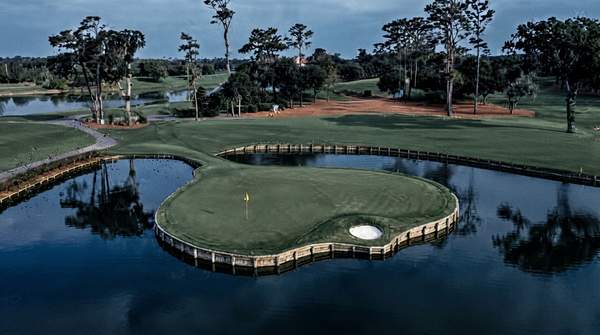
This matters for the reader because it explains what you are actually looking at. A dogleg that follows a ridge or a green tucked behind a natural wetland is not an accident of the property. It is a deliberate strategic problem, built from what the land already offered.
Risk and Reward: The Heart of Strategic Design
The core mechanism of strategic design is choice under pressure. Writing on playability and strategy, The Fried Egg's architecture primer makes a pointed distinction between two ways of challenging good players. One school assumes the answer is narrow fairways, small greens, long rough and severe hazards. But that design, the primer argues, "gives excellent golfers a free pass not to think."
Strategic architecture works differently. It forces the player who wants to shoot a low number to choose from an array of potential shots and make a series of difficult decisions. A strategy-rich hole presents different options, each carrying a different degree of risk and reward.
The practical consequence is that difficulty and strategy are not the same thing. A hole can be hard in a blunt way, punishing everyone equally regardless of decisions. Or it can be hard in an interesting way, where the penalty for a poor choice falls on the player who made it. The second kind is what architects mean when they talk about strategic design, and it is what you should look for when assessing a course.